PachenaDesigning anonymity people can trust: Zimbabwe's workplace review platform, live with 500+ company profiles.
Pachena lets people in Zimbabwe read and write anonymous reviews of their employers and compare pay, benefits and culture. As the designer on a four-person team with the founder, a developer and a marketer, I created the brand, built the design system and designed the platform for both employees and employers.
- Role
- Designer: brand, design system and product design
- Team
- The founder, a developer, a marketer and me (design)
Live
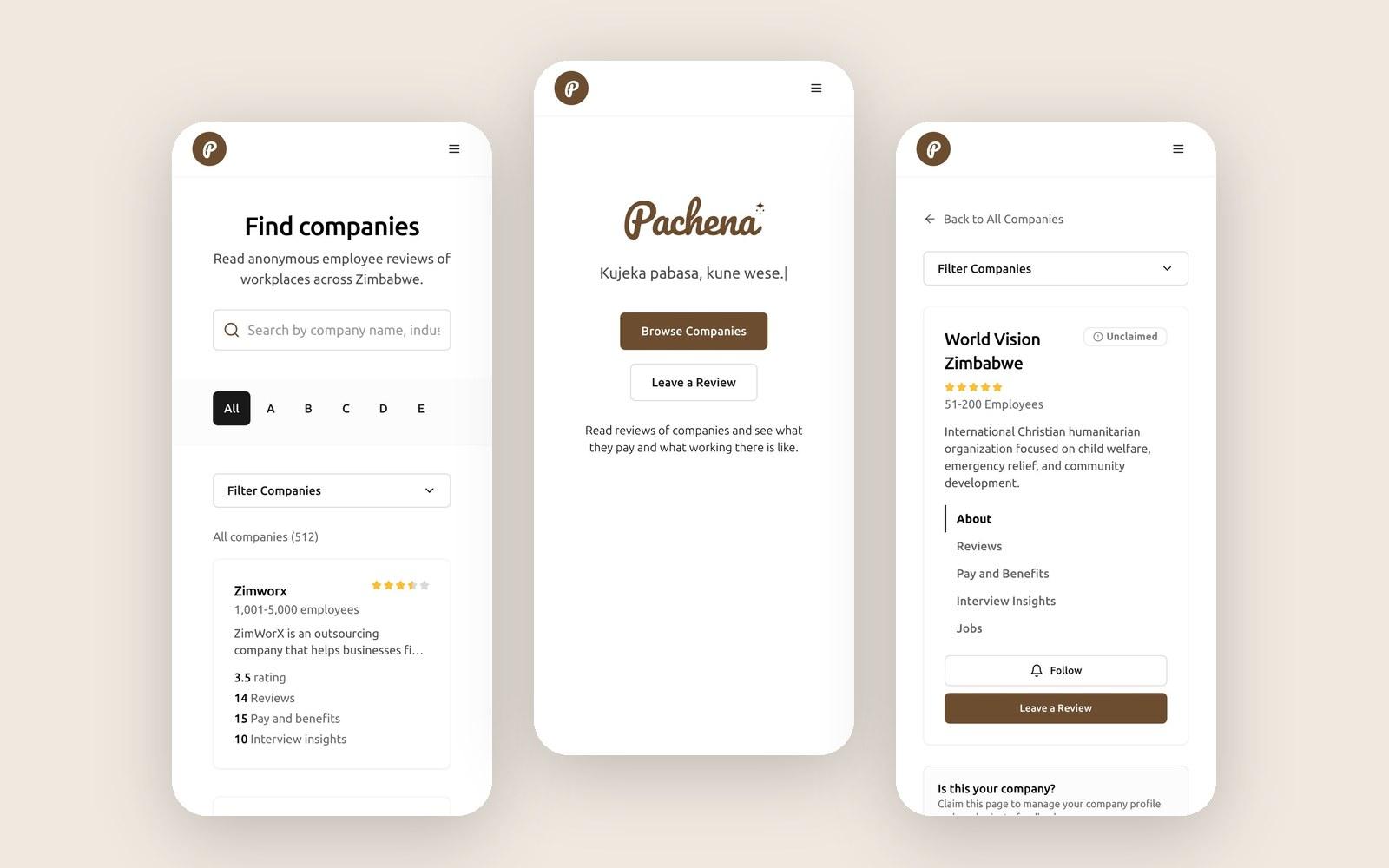
A live platform with more than 500 company profiles, anonymous reviews, pay data, rankings and a paid offer for employers.
- Company profiles
- 500+
- Context
- Startup · founder-led
- Platform
- Responsive web
In short
The problem
Job seekers in Zimbabwe have almost no reliable information about pay or what it is like to work somewhere, and employees have no safe way to share it.
What I did
I created the visual identity, built a compact design system and designed the employee and employer journeys, with anonymity built into every step.
Context
Most hiring in Zimbabwe happens through word of mouth. Candidates accept offers without knowing typical salaries or what the culture is like, and employees who have had bad experiences have nowhere safe to say so.
Pachena set out to make the job market more open: employees share what they know anonymously, job seekers research employers before they apply, and companies get honest feedback and a way to respond.
How I approached it
- 01
Listen
Spoke with employees and job seekers about how they research employers today and what would make them feel safe sharing.
- 02
Brand
Explored identities that feel warm and local rather than corporate, and landed on a hand-lettered script and earthy palette.
- 03
System
Built a small component library first so every page, from search to pricing, shares the same parts.
- 04
Launch and learn
Launched with hundreds of company pages and refined the review and employer flows from real use.
Key design decisions
- 01
A warm brand for a sensitive ask
People are being asked to speak honestly about their employers. I avoided a cold, corporate look: a hand-lettered script wordmark, a round “P” monogram and a deep brown palette make the product feel human and trustworthy. The homepage tagline cycles through English, Shona and Ndebele.
- 02
Anonymity by design, not by promise
Leaving a review needs no name, email or account. Instead of a login, contributors get a recovery code, and the flow reminds them to post from a personal device and network. Moderation rules are published and linked from the interface so people know what happens to their review.
- 03
Two audiences, one system
Employees browse and compare; employers claim their page, respond to reviews, post jobs and benchmark pay. Both journeys share the same components so the product stays consistent across hundreds of company pages, while employers get their own entry point and pricing by company size.
Reflection
Trust is the product. Every visual and interaction choice on Pachena was tested against one question: would this make someone feel safe telling the truth about their job?